I Baschi alla Biennale 1976/2026
Euskara. Kultura. Mundura.
I Baschi alla Biennale 1976/2026
In 1976, amid uncertainty and the struggle for freedom, a group of Basque artists made their voices heard at the Venice Biennale, using art as a tool for expression, liberty, and collective affirmation.
Fifty years on, the Basque Country returns to Venice from a different standing, with different tools and languages, but with the same conviction: that culture is a way of engaging with the world.
The programme maps a course between part and present, memory and creation. It brings past and present, memory and creation. It brings together academic, artistic, and institutional perspectives —uniting practitioners, artists, and thinkers in a shared exercise of reflection and forward-looking projection.
The initiative thus seeks to commemorate a milestone that forms part of its cultural memory, to critically revisit that episode, and, above all, to foster dialogue between generations of creators. It is an invitation to think of art as a space for encounter, transmission and freedom.
Basque Country, freedom and culture
Chaired by the President of the Basque Country, Mr Imanol Pradales
Scuola Grande San Giovanni Evangelista
May 7, 10:00 am
The Basque Country at the Venice Biennale, 1976: Remembering Forward
Auditorium Santa Margherita (former Cinema Moderno)
Università Ca’ Foscari Venezia
May 7, 9:30 am – 4:40 pm
This academic conference offers an exploration of the Basque Country’s role in the international context through culture, art and thought, focusing on the 1976 Venice Biennale. It brings together specialists who will analyse social trnasformations, artistic discourses, and forms of representation and identity, as well as the contemporary challenges facing Basque culture. Co-organised by Ca’ Foscari University of Venice and the Etxepare Basque Institute, in collaboration with the Museum of Contemporary Art of the Basque Country—Artium Museoa, through an academic committee formed by Monika Madinabeitia (Etxepare Basque Institute), Elena Roseras (Artium Museoa) and Miren Vadillo (University of the Basque Country).
This initiative serves as a prelude to the seminar organized by lecturer Iñaki Alfaro within the framework of the Basque Programme (Ca’ Foscari University of Venice and the Etxepare Basque Institute). This seminar is scheduled to be hosted by the Biennale Sessions 2026 programme, held on the occasion of the 61st International Art Exhibition of La Biennale di Venezia, titled In Minor Keys.
Simultaneous interpretation into Italian will be available.
I Baschi alla Biennale 1976/2026
Palazzo Contarini della Porta di Ferro
- May 6, 4:00 – 8:00 pm
- May 7, 10:30 am – 6:00 pm
- Opening event 6:30 pm, Itziar Okariz, Irrintzi Repetición
- May 8, 10:30 am – 9:30 pm
- Preformance 6:30 pm, Tripak kolektiboa, Tripak Tokitik
In 2026 fifty years have passed since the events that marked the Basque presence at the 1976 Venice Biennale. In the context of this anniversary, the Basque Museum of Contemporary Art—Artium Museoa presents a case study as part of a broader research and documentary project that revisits the episode. The project examines how, during the political transition after Franco’s death and the rise of democratic demands, Venice became a stage for international projection. The idea is not to reconstruct the episode linearly, but to revisit it from a contemporary perspective that considers both the conditions that made it possible and its contemporary resonances. With the benefit of hindsight, the 1976 Biennale can be understood less as an isolated event and more as a turning point in the consolidation of cultural frameworks and the formation of a collective imagination that continues to evolve to this day.
In this regard, the presentation that Artium Museoa has put together at the Palazzo Contarini revisits the films that were screened on that occasion in Venice: Ama Lur (1968) by Néstor Basterretxea and Fernando Larruquert, Axut (1975) by Jose Mari Zabala, Arriluce (1971 – 1975) by José Ángel Rebolledo, and …ere erera baleibu izik subua aruaren… (1968 – 1970) by José Antonio Sistiaga, as well as an audio fragment by the Artze brothers, which formed part of the musical and audiovisual show Ikimilikiliklik directed by Mikel Laboa.
Alongside these works are two paintings from the collection of the Museum of Contemporary Art of the Basque Country—Artium Museoa: Juicio de Burgos (manifestación) (1971) by Mari Puri Herrero and Dobla (2021) by Damaris Pan.
In addition, the Palazzo Contarini will host the performances Irrintzi Repetición (2026) by artist Itziar Okariz and Tripak Tokitik (2026) by the Tripak collective.
Related content
-
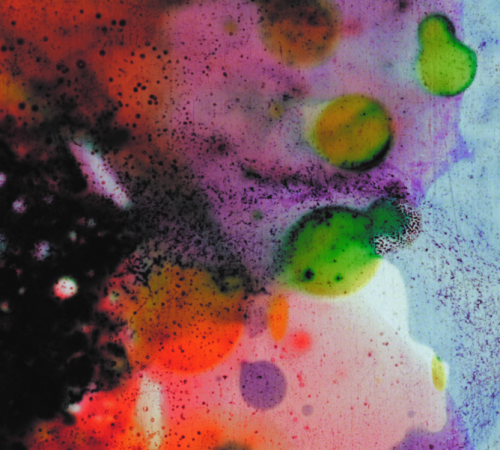

I Baschi alla Biennale 1976/2026
From 6 to 8 May, Venice will host the cultural programme I Baschi alla Biennale 1976/2026, which combines memory and artistic practice.
-
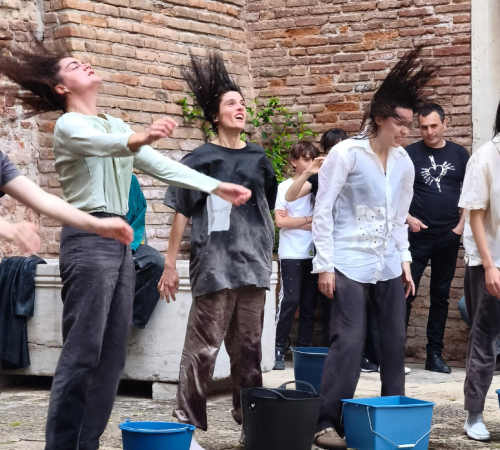
Memory and Basque contemporary creation meet in Venice
Venice has hosted from May 6 to 8 the culture programme I Baschi alla Biennale 1976/2026, outlining both memory and artistic creation. Discover the aftermovie.