The University of Deusto and Etxepare Basque Institute sign partnership agreement
2026/06/03
The University of Deusto and the Etxepare Basque Institute have signed a collaborative framework agreement aimed at promoting and disseminating the Basque language and culture in academic, cultural and social environments.
Euskara. Kultura. Mundura.
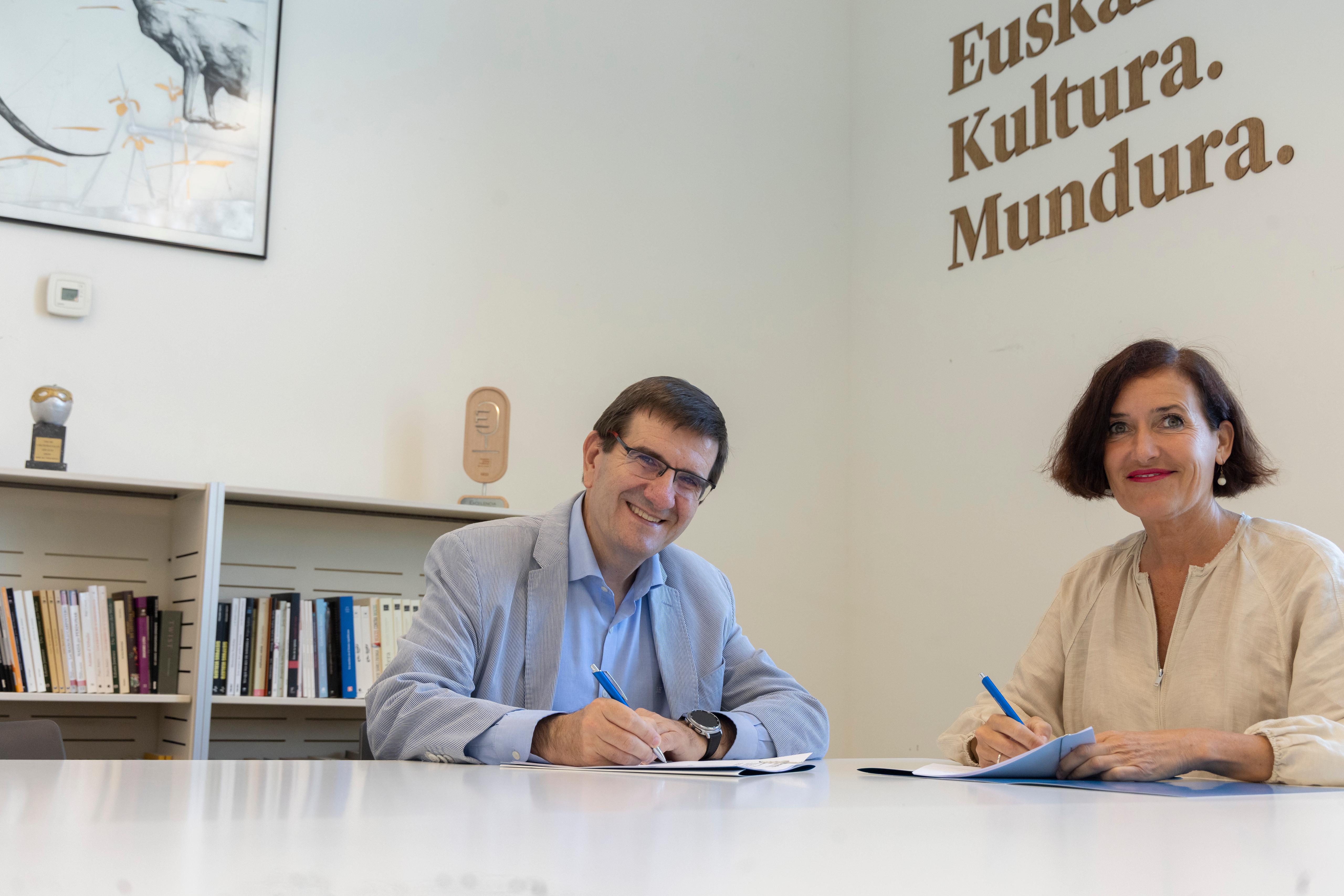
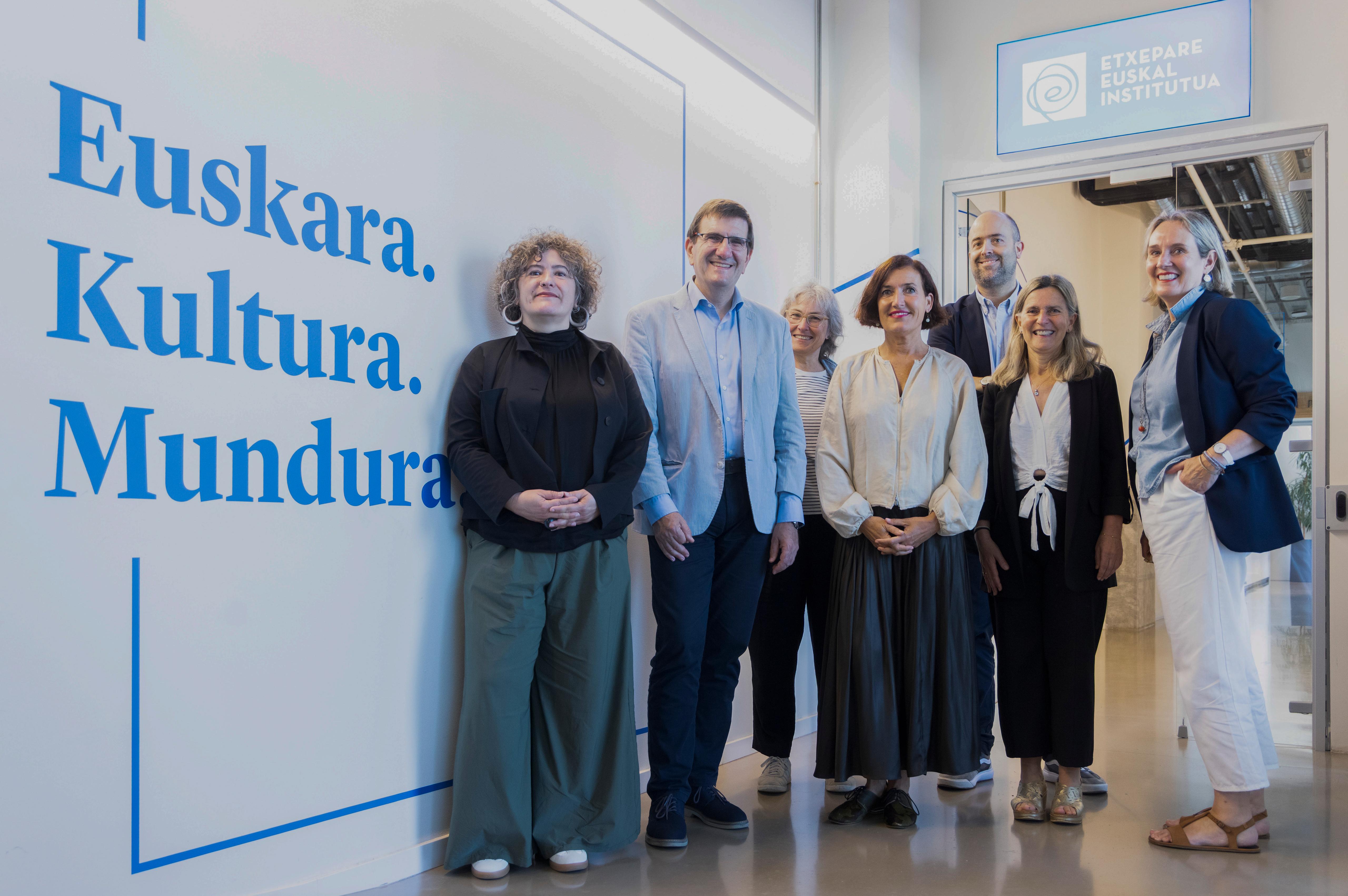
The University of Deusto and the Etxepare Basque Institute have signed a collaborative framework agreement aimed at promoting and disseminating the Basque language and culture in academic, cultural and social environments. Irene Larraza, director of the Etxepare Basque Institute, and Juan José Etxeberria, rector of the University of Deusto, signed the agreement today in San Sebastián.
Through this partnership, the two institutions will join forces to organise educational and cultural activities, promote projects in research and creative work, encourage opportunities for exchange between professionals and the university community, and develop initiatives aimed at strengthening the international profile of the Basque language and cultural creativity.
The agreement runs for five years and may be renewed for further five‑year terms. During this time, both organisations will build collaborative networks and practices to share knowledge, exchange best practice and develop joint projects aligned with their institutional missions.
Also present at the signing ceremony were Monika Madinabeitia, head of Promotion and Dissemination of the Basque Language at the Etxepare Basque Institute; Ane Ferran, Dean of the Faculty of Social and Human Sciences at the University of Deusto; and Larraitz Ariznabarreta, head of Deusto University’s Institute for Basque Studies. It was precisely the latter that facilitated the collaboration between the two institutions.
Since its establishment in 1974, the Institute for Basque Studies has aimed to be a leading academic centre for research, reflection and the creation of knowledge about the Basque language and culture. From an interdisciplinary, comparative perspective and in collaboration with local and international partners, it helps build and strengthen academic networks, promotes research and fosters the social transfer of generated knowledge.

Related content
-
Registration is now open for the 16th edition of Bikaintasuna Euskal Ikasketetan
This year’s edition will take place on 8 July in San Sebastián and will explore music creation, language and internationalisation in order to examine the current reality of artistic production in Basque.
-
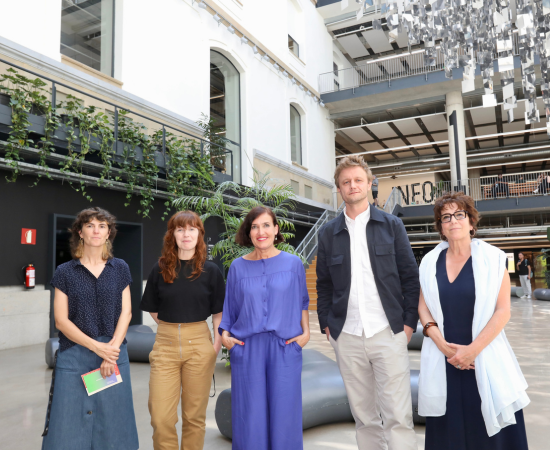
Berlin Biennale and Yokohama Triennale curators explore the Basque artistic landscape
Berlin Biennale curator Vasyl Cherepanyn, and Yokohama Triennale curators Inti Guerrero and Cosmin Costinaș explore the Basque artistic ecosystem to foster future international collaborations.
-
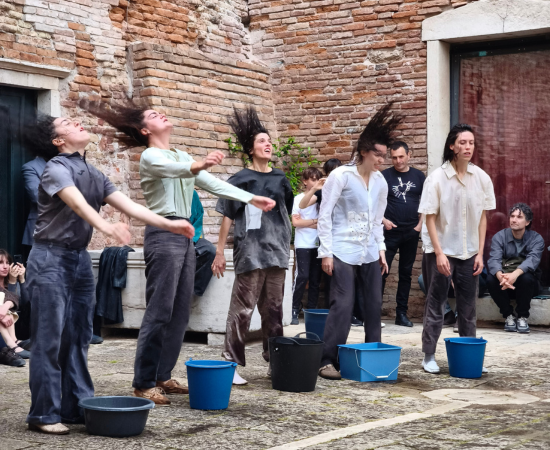
Memory and Basque contemporary creation meet in Venice
The Italian city has hosted from May 6 to 8 the programme I Baschi alla Biennale 1976/2026, outlining both memory and artistic creation. Discover all details.