EAS-EZE: ten years connecting Basque contemporary art with Buenos Aires
2026/09/30
EAS-EZE celebrates ten years of connecting contemporary Basque art with Buenos Aires. Jaime de los Ríos and Mikel Otxoteko to present their projects at MUNTREF.
Euskara. Kultura. Mundura.
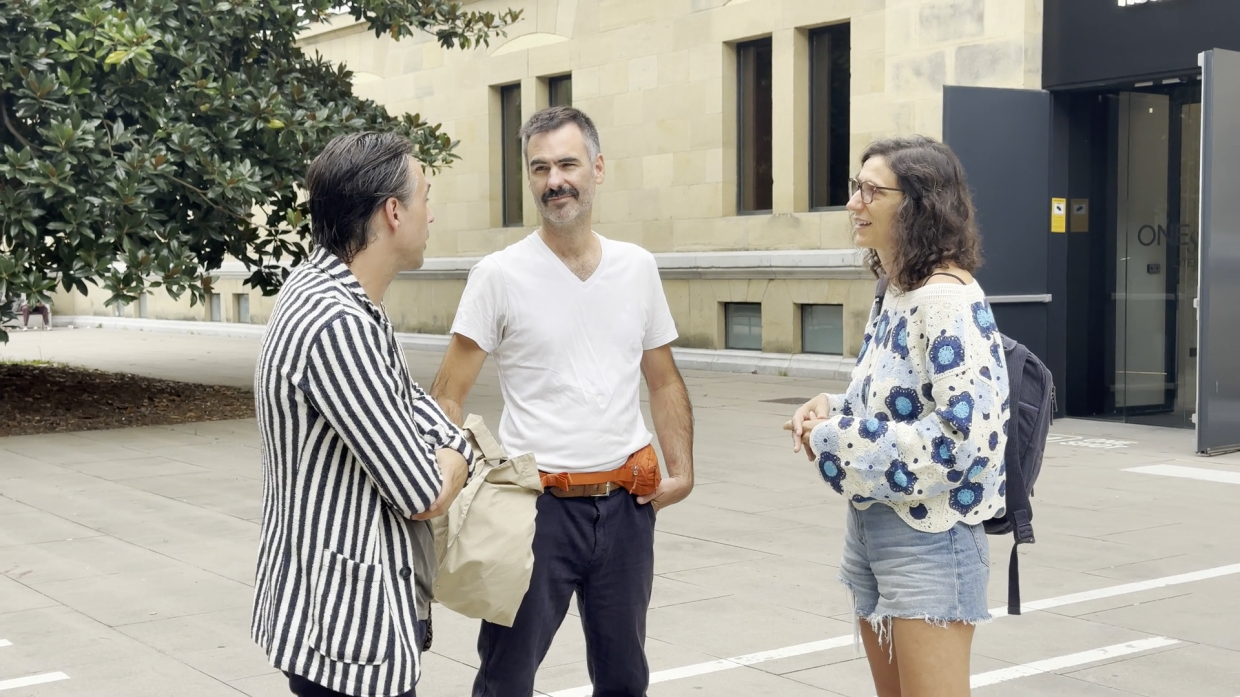
EAS-EZE is celebrating ten years of building connections between contemporary Basque art and Buenos Aires. To mark the anniversary, artists Jaime de los Ríos and Mikel Otxoteko are presenting the projects they have developed through the programme at MUNTREF – Museum of the National University of Tres de Febrero. Organised by Bitamine in collaboration with the Etxepare Basque Institute and MUNTREF, the exhibitions open on 4 October at MUNTREF – Hotel de Inmigrantes. The two projects offer different perspectives on the idea of connection, exploring the links between people, networks, cities and territories.
Jaime de los Ríos: Instrucciones para encender un diálogo (Instructions for Starting a Conversation)
What does ‘Instructions for Starting a Conversation’ involve?
It´s actually a love story. A love story that unfolds every day through every message we send each other.
Every message we send over the internet is translated into binary code and transformed into pulses of light that travel through undersea cables across the ocean. When you send a message via WhatsApp or Telegram, for example, you set in motion what might be thought of as a vast sculpture stretching for more than 15,000 kilometres.
In a sense, it is the largest sculpture in history: stretching thousands of kilometres between two people, yet existing only for a fleeting moment.
The project takes this invisible connection as its starting point, transforming it into a contemporary love story between a Basque man and a young woman from Buenos Aires.
What can the audience in Buenos Aires expect to see in person?
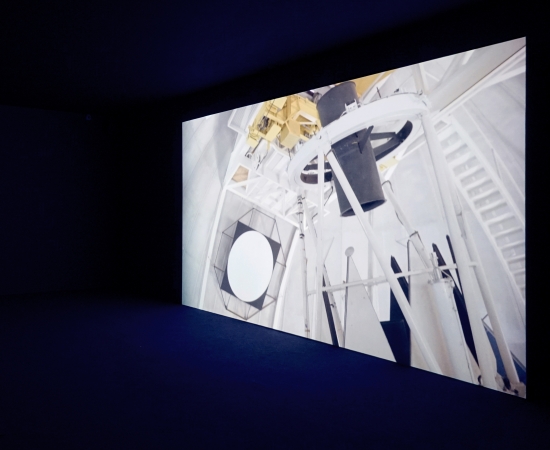
The exhibition features a seven-minute video that tells their story through a distinctly digital language, shaped by data, the internet, IP addresses and maps.
The work also has an online component, allowing anyone to access it and take part in this exercise in connection.
I want to show that technology is not something abstract, but has a physical presence and tangible consequences on Earth. Even when we talk about ‘the cloud’, there is very specific infrastructure behind it. The question is whether we can also bring a touch of gentleness to that technological physicality.
What does it mean to you to be presenting your work in Buenos Aires for the first time?
It’s the first time I’ve actually travelled there, but in a way, I feel as though I’ve been there many times before. I’m a devoted reader of Borges, I love Bioy Casares, and I’ve wandered through those branching labyrinths many times. So it’s very exciting for me.
This work also marks a complete shift in my creative practice. I usually create algorithmic and technological pieces from a non-semantic perspective, working in a space where the words have not yet been written.
In this case, I´ve embraced a story with many words. I wanted to craft a Cortázar-esque story, written by Borges, in the contemporary language of technology.
How do you currently view the international profile of contemporary Basque art?
I think we’ve reached a point where we need to rethink our approach and find new ways of reaching international audiences.
That’s why programmes like this are so important. They help bring contemporary Basque culture to audiences abroad, while also encouraging us to look at internationalisation from a critical perspective and recognise that there is still a long way to go.
Being an artist requires enormous personal commitment. In a sense, you’re constantly putting yourself and your work out there. That’s why institutional support is so important.
The Etxepare Basque Institute has supported my work for many years, and so has Bitamine. When that kind of support continues over time, it becomes part of your creative journey.
I think we’re now seeing new projects, new galleries and a new ecosystem beginning to emerge. We’ve been through some difficult years, but there are signs of recovery. That support helps artists and their work reach audiences they might not otherwise be able to reach.
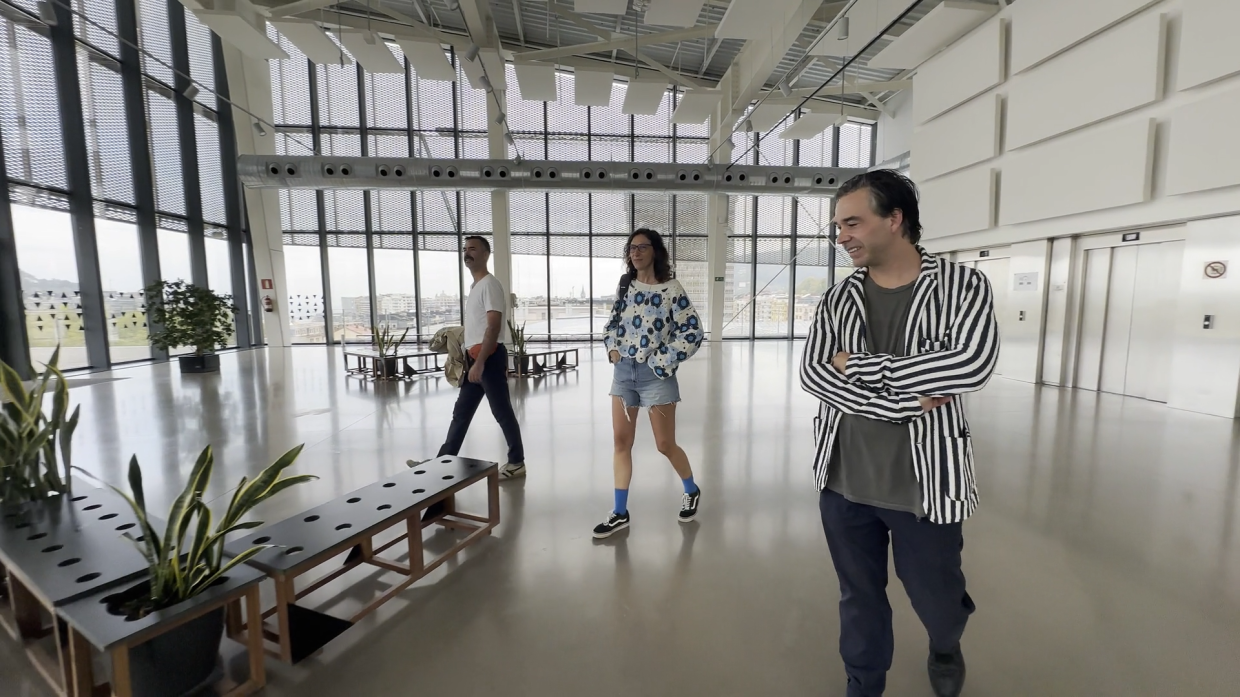
Mikel Otxoteko: Buenos Aires, Ecologías Urbanas
What is Buenos Aires, Ecologías Urbanas about?
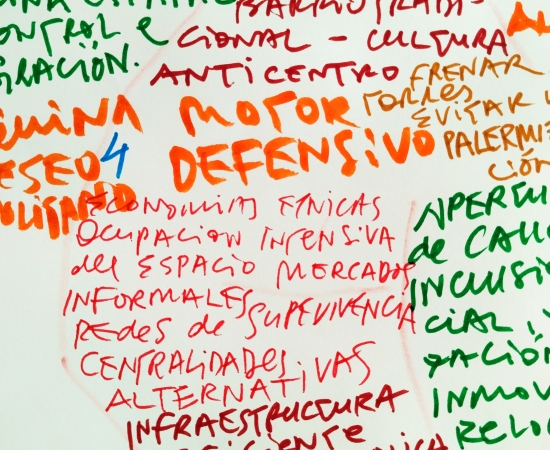
Buenos Aires, ecologías urbanas (Buenos Aires, Urban Ecologies) aims to be a tool for exploring the city and bringing its reality to the fore.
The installation comprises five illuminated signs and, at its centre, a large map of Buenos Aires that is initially left blank. Through public participation, the map gradually takes shape as visitors add cards bearing phrases related to the urban experience.
As the cards accumulate, areas, clusters and connections begin to emerge, creating a collective interpretation of the city.
For me, that is essential because I’m aware that I am coming in as an outsider. I don’t want to define Buenos Aires from the outside, but rather to create a framework that allows the people who live there to build their own representation of the city.
Buenos Aires is a vast and diverse city, shaped by overlapping layers of history, migration and social change. This work seeks to reveal some of the connections between them.
Is this a piece that takes shape through audience participation?
Yes, although I don’t think of it so much as an unfinished work that the audience has to complete, but rather as an instrument.
I want people to use it. The approach is entirely artistic, but what matters is that it works as a tool for exploring reality.
In previous projects, I’ve carried out extensive research and taken part in residencies that allowed me to engage very directly with the subject I was exploring
In this case, thereis a distance. I decided to embrace that distance and make it part of the creative process, asking myself how it might lead me towards other ways of exploring reality.
What is the connection between the project, Buenos Aires and the Basque Country?
The work is connected to Buenos Aires, but also to Euskal Herria.
There is a long history of connections between the two territories, shaped by migration, relationships and exchanges that have left their mark on both.
It is precisely this space of connection that interests me: how one territory relates to another, and how those historical, social and ecological ties continue to shape the way we understand both places today.
How do you view the current drive towards the internationalisation of Basque artists?
I think that in recent years there has been a real sense of momentum and a great deal of ambition, in the best possible sense. For artists, that is essential.
I can speak from my own experience. My recent work has benefited from the support of Etxepare and other organisations that are helping Basque artists reach international audiences. This support allows us to build connections in other contexts, work from different perspectives and broaden the scope of our work in ways that would otherwise be very difficult, if not impossible.
EAS-EZE
EAS-EZE is run by Bitamine, in partnership with the Etxepare Basque Institute. The programme promotes artistic research and production, raises the international profile of Basque artists, and fosters mobility and cultural exchange.
Over the past ten years the programme has become a platform for internationalising Basque contemporary art, creating opportunities for research, production and collaboration among artists, institutions and diverse cultural contexts.
In line with the Etxepare Basque Institute’s mission to promote the international presence of contemporary Basque culture, EAS-EZE helps to strengthen collaborative networks and open up new avenues for dialogue and visibility for Basque creative work on the international stage
Do you want to learn more about Basque art? Download this book for free.

Related content
-
EAS-EZE 2026: Jaime de los Ríos and Mikel Otxoteko
Jaime de los Ríos and Mikel Otxoteko will travel to Buenos Aires to present their projects at one of the leading venues for contemporary art in Latin America, the Center for Contemporary Art at Universidad Nacional de Tres de Febrero (UNTREF).
-
Basque creation in Shanghai
Many works by the Basque artists Jorge Oteiza and Itziar Barrio will take part in the 14th edition of the Shanghai Biennale, as a result of all the work done in the programme ZABAL.
-
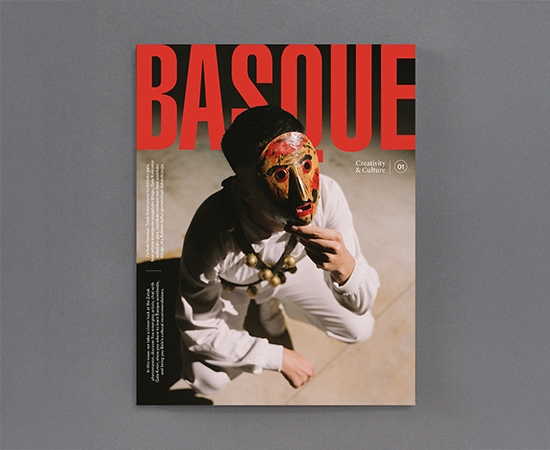
BASQUE. Creativity & Culture #1
In this issue, we take a closer look at the Zetak phenomenon, discover five emerging artists, chat with Gala Knörr, show you where to learn Basque worldwide, and bring you Bele’s cultural recommendations.